MSc Topics

Waveform analysis is a technique to extract information from signals, such as amplitude and shape. It is widely used in particle physics experiments, for example in the readout of calorimeters. However, waveform analysis is computationally intensive and energy consuming, which limits its scalability and applicability. Spiking neural networks (SNNs) are a type of artificial neural networks that mimic the behavior of biological neurons, which communicate through spikes or pulses. SNNs have the potential to perform waveform analysis with high accuracy and low energy consumption, as they can exploit the temporal dynamics and sparsity of signals. The objective of this project is to investigate the feasibility and performance of using SNNs for waveform analysis in particle physics. You will evaluate and compare the accuracy and energy efficiency of SNN models with conventional methods on simulated and real data sets for CsI(Tl)-crystals similar to those used, for example, by the Belle II experiment. The results of the model evaluation will be analyzed to identify the strengths and weaknesses of SNN models for waveform analysis in particle physics. You will discuss factors that affect the accuracy and energy efficiency of SNN models will suggest possible improvements and future directions.
Advisor: Prof. Dr. Torben Ferber
Contact: Dr. Jan Kieseler
Skills: Python-programming, Machine Learning
last update: 17.10.2023

The electromagnetic calorimeter (ECL) is a subdetector of Belle II that measures the energy and time of photons and neutral hadrons, and is used to identify electrons. The ECL reconstruction is computationally intensive and time-consuming and needs specialized algorithms to be used for trigger decisions. One possible way to achieve this goal is to use QKeras, a quantization extension to Keras that provides drop-in replacement for some of the Keras layers. QKeras allows the creation of deep quantized neural networks that can be deployed on field-programmable gate arrays (FPGAs). The proposed research project aims to use QKeras to optimize the existing ECL reconstruction algorithm for Belle II and prepare the implementation on FPGAs. You will design and train deep quantized graph neural network using QKeras that can perform ECL reconstruction with high accuracy and efficiency. You will then compare the performance of the QKeras-based ECL reconstruction with the current one in terms of energy and time resolution, particle identification, and physics observables. As last step, you will evaluate the feasibility and benefits of deploying the QKeras-based ECL reconstruction on FPGAs in terms of processing speed, power consumption, and resource utilization.
Advisor: Prof. Dr. Torben Ferber
Contact: Isabel Haide
Skills: Python-programming, Machine Learning, QKeras, FPGA
last update: 15.10.2023
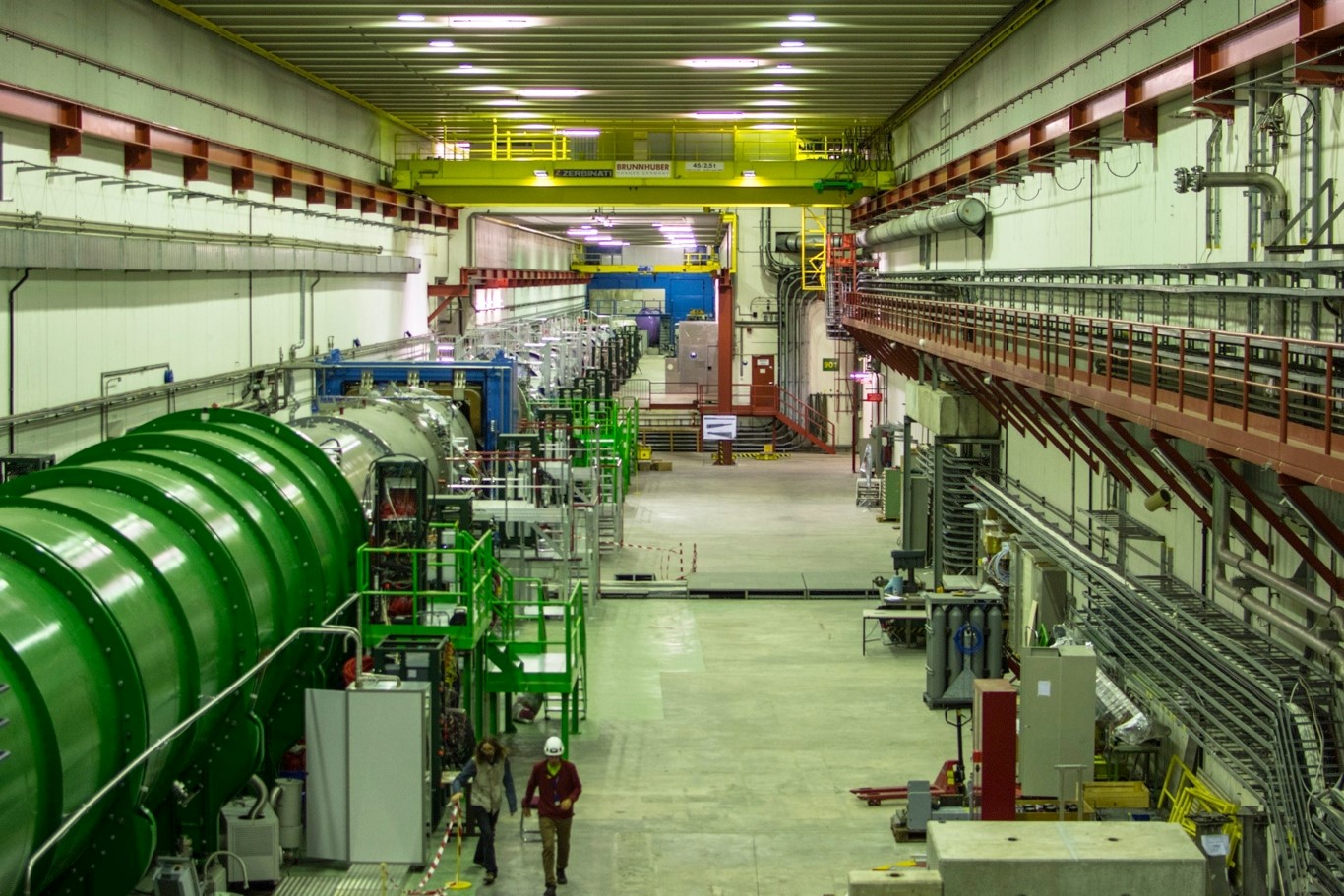
Light dark sector particles can be searched for at high intensity beam dump experiments like LUXE (Laser Und XFEL Experiment) at DESY or SHADOWS at CERN. Axionlike particles would be detected by reconstructing its decay products: Two photons with a distinct angular and energy correlation. During the MSc thesis you will design and optimize possible detector options to measure energy, time, and direction of the decay photons using state-of-the-art simulation software.
Advisor: Prof. Dr. Torben Ferber, Prof. Dr. Markus Klute
Contact: Dr. Jan Kieseler
Skills: Particle physics (ALPs), GEANT4, data analysis, Python-programming, C++-programming
last update: 13.10.2023
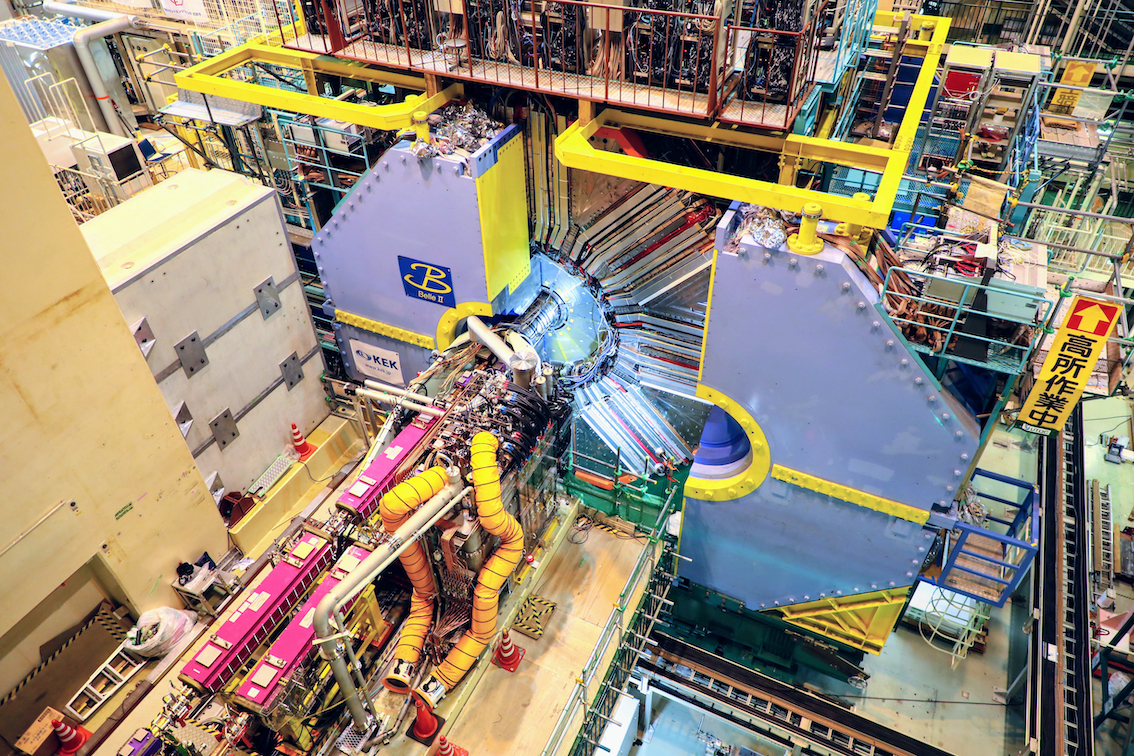
The Belle II experiment is world-leading in searches for axionlike particles (ALPs) with masses in the GeV-range. Using the growing Belle II dataset, you will prepare a new search for ALPs, trying to find physics beyond the Standard Model. You will learn about statistical methods for limit setting and about methods to reduce the very large Standard Model backgrounds. If interested and with some prior experience, the use of machine learning is a possible direction to produce world-leading results in a potential following PhD thesis.
Advisor: Prof. Dr. Torben Ferber
Contact: Prof. Dr. Torben Ferber
Skills: python programming, data analysis, statistics
last update: 13.10.2023
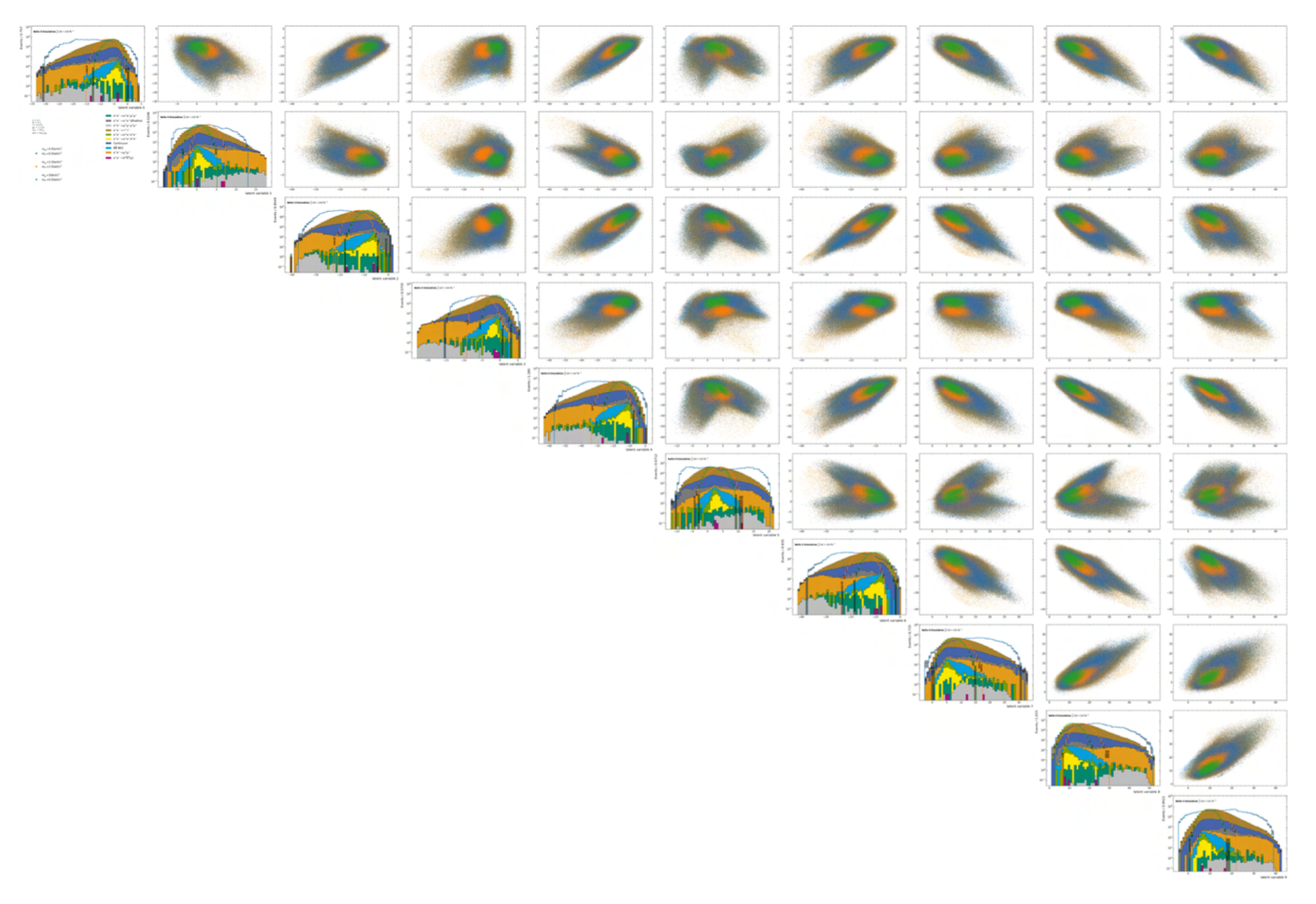
In recent years methods for model independent searches for physics beyond the standard model came into focus of particle physics. As a complementary method to dedicated searches for certain models, they promise, among other things, new clues for the properties of Dark Matter. Anomaly Detection presents an ansatz to extract uncommon events from a large amount of (known) background events without knowing their properties in advance. For that a number of statistical Methods like Density Estimation, Decision Trees and Neural networks are used. In this project already conducted BSM searches (axion-like particles, inelastic dark matter) are used as benchmark to develop and compare such models. (image from. J. Eppelt (MSc thesis))
Advisor: Prof. Dr. Torben Ferber
Contact: Jonas Eppelt
Skills: Particle physics, data analysis, Python-programming, machine learning, PyTorch
last update: 27.09.2023
Next generation experiments at CERN will be searching for Axion-like particles (ALPs) with unprecedented sensitivity. To exploit those large detectors like SHADOWS, we will be using machine learning tools to predict physics quantities based on incomplete detector information in data. During the MSc thesis you will develop machine learning algorithms and work closely with experimental and theoretical physicists to optimize the discovery potential of detectors like SHADOWS at CERN.
Advisors: Prof. Dr. Torben Ferber, Prof. Dr. Felix Kahlhoefer
Advisor: Prof. Dr. Torben Ferber
Skills: Particle physics (ALPs), data analysis, Python-programming, machine learning, PyTorch
last update: 27.09.2023
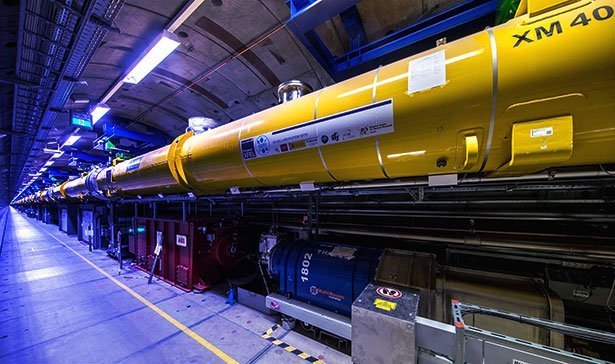
A new experiment at LUXE (Laser Und XFEL Experiment), but also particle physics experiments like Belle II, have to discriminate signal (photons) from background (neutrons). You will be using photon test-beam data to develop state-of-the-art deep learning algorithms for anomaly detection to reject non-photon events in calorimeters. The algorithms will be ultimately deployed on GPUs and FPGAs for offline and real-time analysis with inference times of a few 100 ns only.
Advisor: Prof. Dr. Torben Ferber
Contact: Prof. Dr. Torben Ferber
Skills: machine learning, detector development, GPU and FPGA usage
last update: 27.09.2023
Electrons are subject to Bremsstrahlung when traversing the volume of the Belle II detector. The photon which is emitted in this process carries energy away from the electron and produces an additional signal in the electromagnetic calorimeter. The aim of this project is the development of a method to recover possible Bremsstrahlung photons for a given set of particle tracks using multivariate analysis techniques. The method is compared to an existing classical solution to the problem with the ultimate goal to outperform it.
Advisor: Prof. Dr. Torben Ferber
Contact: Dr. Pablo Goldenzweig
Skills: Machine learning, data analysis, Python-programming, C++-programming
last update: 27.09.2023
Recently the Belle II experiment set a stringent limit on the branching fraction for the rare decay B+ → K+νν, which is b → s transition, using a novel tagging approach which relies heavily on a machine learning-based selection. The measurement of the branching fraction for this decay is of great interest as it is strongly sensitive to many NP scenarios, such as leptoquarks, axions or other dark matter candidates. In this project, you would perform the first search with Belle II data for very similar processes also using machine learning-based selection, but instead of b → s transitions, you would search for b → d transitions B+/0 → π+/π0/ρ+/ρ0 νν, where the branching fractions in the SM are further suppressed by |Vtd/Vts|^2.
Advisor: Prof. Dr. Torben Ferber
Contact: Dr. Slavomira Stefkova
Skills: machine learning, C++, python programming, data analysis, statistics
last update: 27.09.2023
In this project, search for a process of B+ → (ccbar → ν̄ν) K+ where ccbar is one of the resonant states such as J/psi which decays invisibly. In the SM this decay is mediated by Z Bosons and the branching fraction for this decay is expected to be tiny. However, beyond SM physics, such as new Z’ Bosons, could enhance the branching fraction significantly. For this search you will work on an analysis which will use so called "exclusive hadronic tagging" for the other B in the event before looking for a signal decay of interest within the rest of the event. Development of the rest of the selection will include an implementation of machine learning algorithms that will be trained in order to suppress backgrounds.
Advisor: Prof. Dr. Torben Ferber
Contact: Dr. Slavomira Stefkova
Skills: machine learning, C++, python programming, data analysis, statistics
last update: 13.10.2023
The radiative leptonic decay B+ → l+ ν γ yields important information for the theoretical predictions of non-leptonic B meson decays into light-meson pairs. The emission of the photon probes the first inverse moment λ_B of the light-cone distribution amplitude (LCDA) of the B meson. This parameter is a vital input to QCD factorisation schemes for the non-perturbative calculation of non-leptonic B meson decays. This project aims to observe the B+ → l+ ν γ decay for the first time and set an improved limit on λ_B using modern machine learning analysis techniques.
Advisor: Prof. Dr. Torben Ferber
Contact: Dr. Pablo Goldenzweig
Skills:C++, python programming, data analysis
last update: 13.10.2023
The Belle experiment, which concluded in 2011, collected a unique sample of Υ(5S) decays to Bs meson pairs in the clean e+e- collision environment. This dataset has yet to be fully exploited. The rare decay Bs→φπ0 is strongly suppressed in the Standard Model and has yet to be observed. However, in a theoretical analysis motivated by the Kπ CP-puzzle, models with modified or additional Z bosons allow for an increase of the branching fraction by an order of magnitude without inconsistencies with other measurements. The Kπ CP-puzzle consists of an unexpectedly large direct CP asymmetry in the decays B± → K±π0 and B0 → K±π∓. These decays are dominated by isospin-conserving processes, but have a small contribution from isospin-violating penguin processes as well. In the isospin-violating decay Bs→φπ0 the penguin processes dominate, which means that potential NP contributions can have a much larger relative effect. If these contributions exist, an observation of the Bs→φπ0 decay may be possible with the Belle Υ(5S) dataset.
Advisor: Prof. Dr. Torben Ferber
Contact: Dr. Pablo Goldenzweig
Skills:C++, python programming, data analysis
last update: 13.10.2023